

Don't Start Too Fast
On hubris, bum knees, and the metaphysical beauty of sports.

I was already in trouble before I got started.
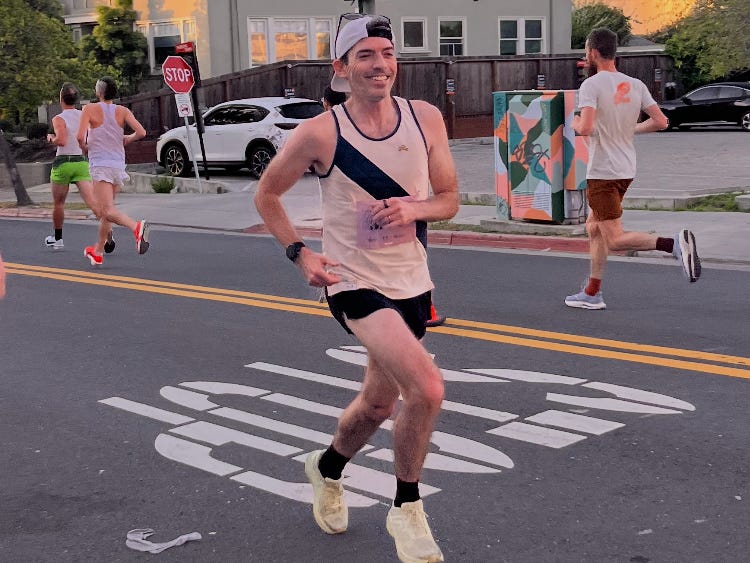
Milling around the start line on Lake Merritt Boulevard, a few minutes before the 2026 Oakland Marathon, I chatted with friends. We shouted over the pop music and upbeat drone of MC commentary, sponsor plugs, and admonitions that “our start time is in 10 minutes, folks. So get yourself lined up and ready to go!”
Nowadays, medium-sized road marathons have rebranded as “festivals”: multi-race events that let organizers juice registrations to make the margins work. Marathon, half-marathon, 10K, 5K, kids run, expo, club runs, finish line party—the vibe is more EDM concert than traditional footrace. That’s fine; the more, the merrier. And the pop music is nice.
As the gun time approached, the sun began breaking through the fog like froth on the wave-like ridge of hills that sit poised over Oakland, as if the land might roll back toward the Pacific in some oceanographic inversion.
My competitive aspirations were nil. I’ve been “recovering” from a torn meniscus for over a year, and while the last 2-3 months have shown great progress, my goal for last weekend’s half marathon was just to cover the distance feeling healthy and hale. Why worry about time and place?
But.1
When you are a competitive person, you compete not only with those around you, but with the selves of your past. Cursed with self knowledge you are. Cursed with the pace you once had (and might have again). Cursed with fell shadows of arrogance whispering sweet admonitions, so quiet you can’t hear them and yet still listen: of form, finishes, and glories of yesteryear.
Anyway, I went out too fast.
The key issue was lining up too close to the front of the pack. Drawn out with the gun, I covered the first two miles quicker than I would have liked, which was fine—I could have slowed down. But foot races have fluid dynamics; you move within a stream, drafting off the bodies flowing around you.
I cruised, slowing on the downhills to avoid knee impact and flowing along on the flatter sections.
Aerobically, I could run 6:20 pace until the cows came home. What I apparently could not do was run that pace on my much-maligned knee, which tapped out near mile 11 with a spasm of locked-up discomfort. I jogged to the finish and spent the next few days in discomfort.
Alas, hubris got the best of me.
Maybe it is healthy (in the character-building sense) to be running against some limits, a reminder for me that, despite my willpower, matter does reach a breaking point.
I’ve long been fascinated with this interplay of matter and will, of the tension between the material and the immaterial. Compared with people from periods in the past, we moderns tend to be radically materialist. Our science, technological advances, and economic policy is predicated upon the idea that the world is measurable, testable, fungible. That it is, if not predictable, at least understandable.
Athletic pursuit, however, is where we check our otherwise materialist worldviews at the door. If sport was just a matter of physics, of mass connecting with other mass, then it would not be particularly interesting. Billiards is not fun because of the ways the balls crack together and fall into the pockets, but rather because a clever human maneuvers them there with the cue ball.
The drama of sport relies on space for the immaterial—what we might call the will, or mind, or genius. We let that older metaphysical thinking colonize a bit of our brain space for a couple of halftimes, tour stages, or 60 seconds of distance run. And thank goodness for it.
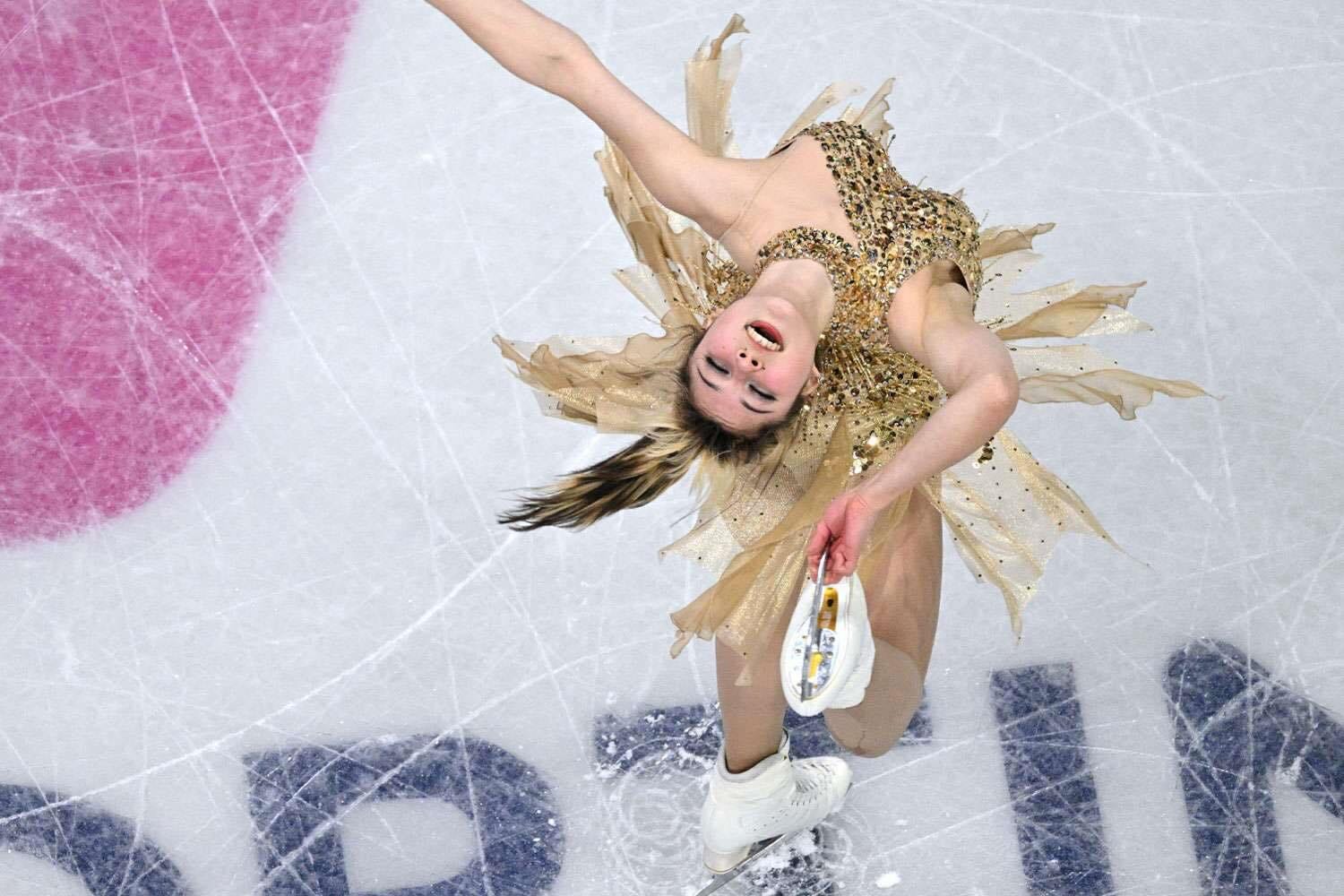
To consider humans mere instruments for tuning and optimization is to evaporate what makes our endeavors worth pursuing.
Now I’m encountering corporeal limits in new ways—literal sinew that isn’t working well anymore. I look down at my legs with eyes that now require prescription lenses, and realize those plans I made might not be in the cards.
I don’t want to overdramatize an achy knee. We get old, priorities evolve. Hell, I might get the damn joint scoped and next year I’ll be back doing silly sporting things again.
But all this is to say that sport helps us see a sort of cosmic pathos where movement is not mere matter to be manipulated, but some of our most human capability through, with, and against the limits of the body to express our personal sense of creation, will, and self.
Just make sure you don’t start too fast.

Coming up: a live chat with Raziq Rauf
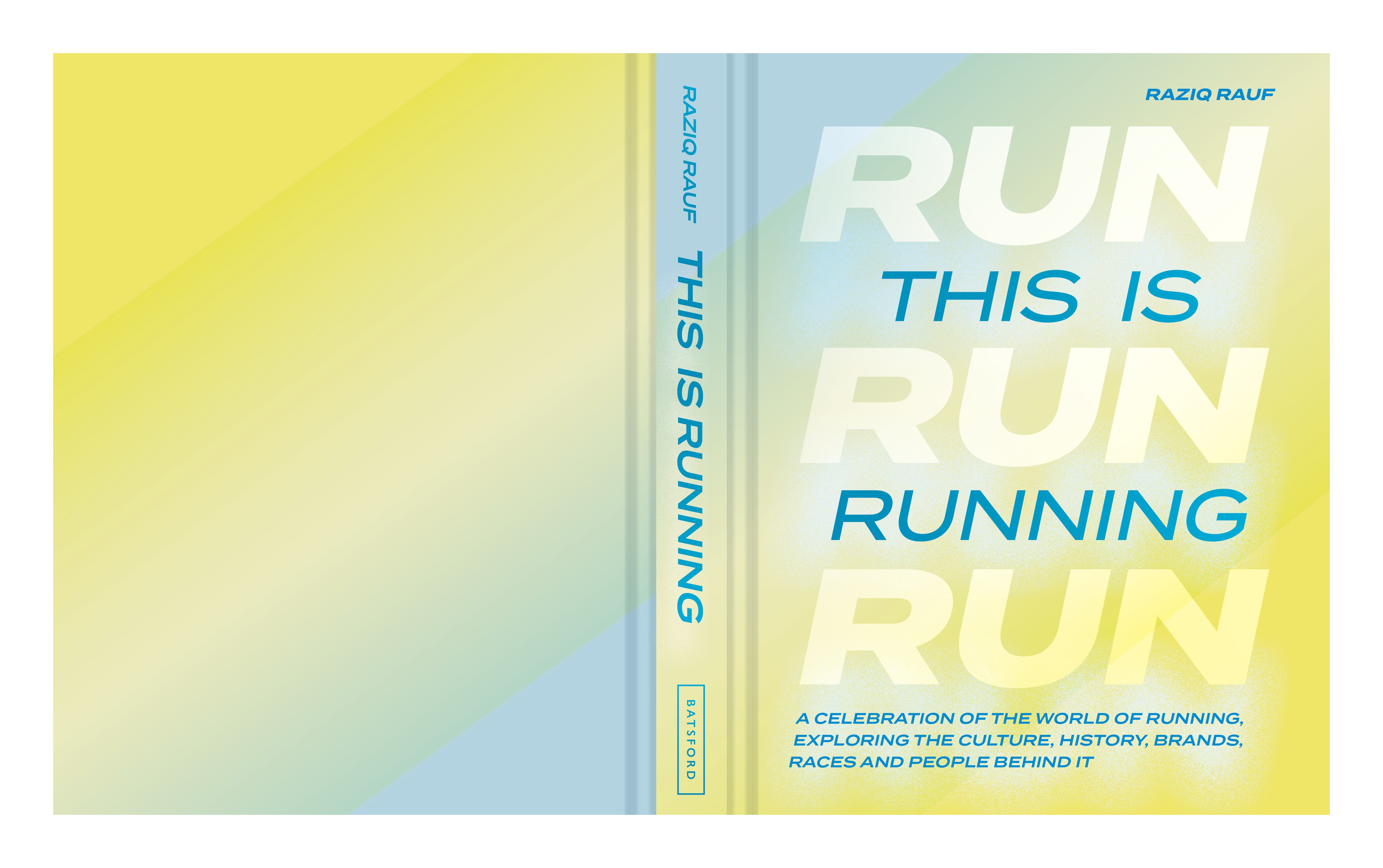
I’m stoked to join Raziq Rauf on Substack Live next week on April 7 at 11:00 Pacific, the day his new book, This is Running, is released. Pre-order it now and then join us on Substack for a discussion about culture and running. Knowing the two of us, we’ll probably end up debating capitalism, brands, and consumption. 🌶️🌶️🌶️
Curious about the book? This is Running has received well-deserved coverage from independent media:
Raz chats with Mario Fraioli about run crews and the LA Marathon
Mike Hahn asks Raz three questions about writing and meaningful work
Craig Lewis chats with Raz about Harry Styles and if running is cool now
Things I liked
“The Body is Subservient to the Mind.” Speaking of overcoming limits, I found Steve Magness short piece about Roger Bannister’s coach/adviser Franz Stampfl’s emphasis on sports psychology a delightful read. Stampfl’s race-day pep talk before Bannister’s sub-4 mile is going straight into my commonplace book.
North Woods by Daniel Mason. I loved this novel about a plot of land in western Massachusetts that layers history and environmental over a story spanning generations. It’s not quite environmental writing, not quite historical fiction; rather Mason’s lovely prose tells a surreal story about human and more-than-human relationships with land and those who come later.
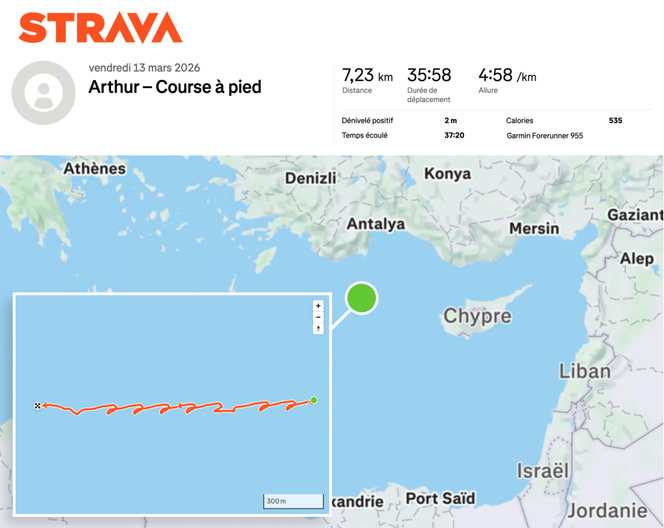
Strava aircraft carrier run. As the latest doomed-to-fail episode of the Forever War plays out, we can only chuckle that some hapless French sailor outed the location of his naval strike group on Strava. (Le Monde)
An invitation to the pain of running. Sabrina Little on comparing the pain of running to the pain of learning. It’s timely, given the increasing temptation to shunt the difficulty of thought to automated systems. “To be educated is to be transformed. This transformation primarily happens through strain — productive strain, but strain nonetheless.” (iRunFar)
Renegade Running x Nike collab. I don’t usually post about product drops, but for Oakland’s own Renegade Running, I’ll make an exception! Today you can check out a Nike x Renegade footwear launch of Vaporfly and Vomero collection. Available in-store (Oakland and LA) and online.
Parting thought
“If you forego this chance, would you ever forgive yourself for the rest of your life? You will feel pain, but what is it?”
— Franz Stampfl to Roger Bannister, quoted in this great little piece from Steve Magness.
Spoken with the same two-syllabic intonation as Kendall betraying Logan in Succession.
Really loved this one, Sam — and, at 55, can I ever relate!!
"To consider humans mere instruments for tuning and optimization is to evaporate what makes our endeavors worth pursuing."
This is just an epic sentence. In the age of super shoes and technological specialization of the sport, where it feels like records and success are less about the athlete and more about perfection/optimization, this statement just hits different. So well said. I love it.