



A couple weeks ago, I sat down for a beer with Terrell Johnson, author of the popular running newsletter The Half Marathoner. Terrell started the newsletter as a hedge against his then-website going down. Now, eleven years later, he’s one of Substack’s legendary running writers—though if you read his work, you know he’s only nominally writing about the actual activity of running.
Johnson dwells on the moments that surround a run—the nature he encounters running along the river paths near his home in Georgia, how life changes subtly with the gentle undulations of the seasons, and the experience of balancing family with work, life, and his personal growth as a writer and athlete.
As a relatively new dad, I was especially interested to hear his thoughts on fatherhood, work, and measuring those ‘big rocks’ with running and writing. But our conversation was wide ranging, touching on the ethics of trail running, the brand-influencer bubble inside endurance sports, running strollers, and what the band Blues Traveler can teach aspiring writers.
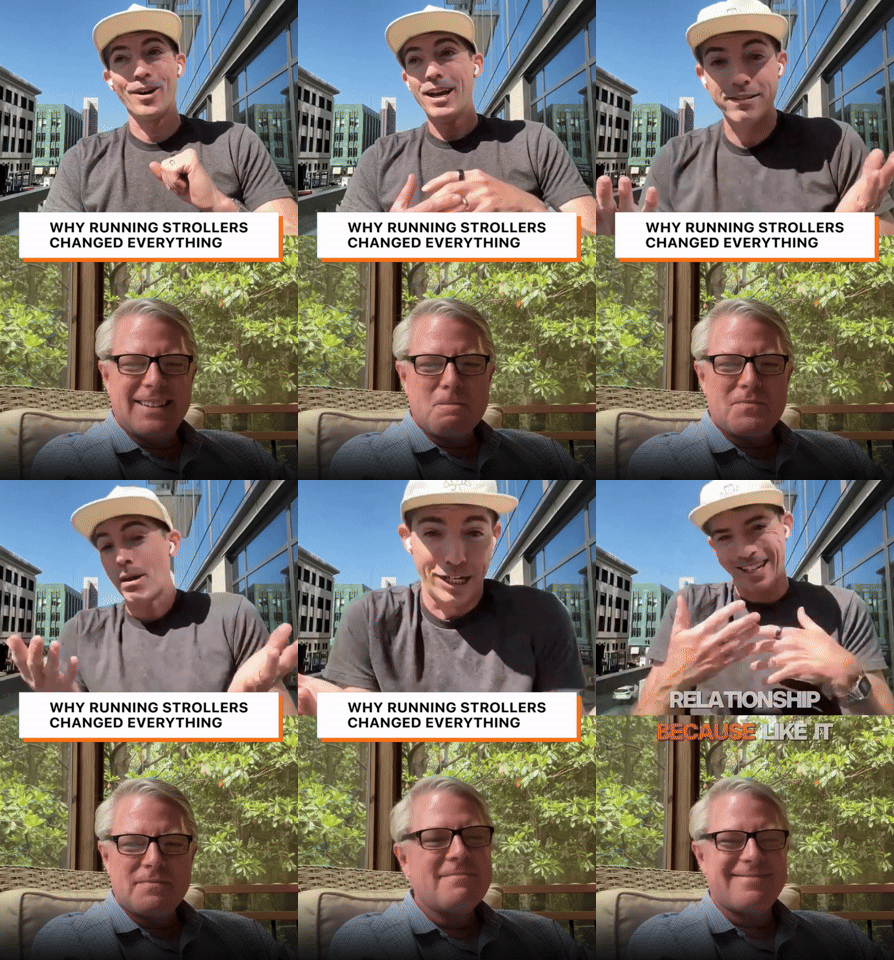
Here’s a short excerpt from our longer conversation, including Terrell’s book and newsletter recommendations. Watch the full interview here or by tapping on the preview at the top of this post.
Sam Robinson: You started running relatively later in life and not specifically as a competitive endeavor. How did that shape your relationship to the sport, and the way you cover it?
Terrell Johnson: I never saw myself as much of an athlete. If you run cross country in high school, or you run track, that’s going to shape how you see running. But I didn’t start running until I was 25. I ran the Peachtree Road Race once—which is basically a shuffle for the first couple of miles because it’s 55,000 people on the Fourth of July—but it was a social activity for me. It was not a competitive activity.
Fast-forward to when I started this website and this newsletter—most running media is about the competitive activity, focused on the pros, on what’s happening at the front of the pack. But that’s not most runners’ personal experience.
There’s certainly a democratic ethos to your newsletter; a thread of inclusive kindness runs through it. That’s maybe even reflected in the title of your publication, The Half Marathoner.
You’ve described the half marathon as the “anchor distance” for this part of your life, which implies that running half of a marathon is just fine. Can you walk through how you arrived there?
Running marathons is more popular than its ever been. Everybody wants to run Boston; everybody wants to run New York, Tokyo, Sydney, and Berlin. And I know these are all amazing, but I have not run any of the Marathon Majors yet.
I’ve run San Diego, Bermuda, and the Marine Corps Marathon, which isn’t an easy one. (I remember seeing a guy in fatigues and boots there, carrying a flag in his arm the entire 26 miles. I was like: that’s got to be a strong arm.)
When I did all that, I was in my 20s. I didn’t have any real responsibilities other than my work, so I was able to devote a ton of time to it. Later, especially as I got older and got married and had children, that became really tough. Half marathons take time too, but you have to make the marathon happen; it’s like having a second job when you’re training because you’re running such long distances.
You do reach a point where you hit a roadblock and you can’t do the length or effort that you once could anymore. It’s not just physical; I don’t have the drive to run that kind of mileage because my son is going through the phases of growing up. Right now, he is twelve. And in no time, he will go off into his life.
You have a new baby, right? It's like you having a new life, like being born into an entirely new life, and you want to be there for it.
What does that look like in practice, day-to-day, with your son?
He goes through phases. He really got into UGA football last year, so he wanted to play football every afternoon outside. I could go run on the treadmill, or I could do this with him, but I can’t do both. In that way my life has changed.
A few years ago I came across a piece in The New York Times—one of those advice columns where someone wrote in saying their spouse was borderline addicted to their training. I’ve never been addicted to the training myself, but you could see how something that’s a wonderful thing can become a not-so-good thing in your life.
Have you ever read The Divine Comedy? There’s a great line in there, basically about making a fault out of a virtue. You can take good things and turn them into bad things if you do them too much, or you’re too obsessive about them, or you devote too much time to them.
How did your son get into sports? Did you push him?
We just signed him up for things. I can’t give you advice, but I can tell you what my experience was. My wife has a sister who had a little boy—he’s now about to graduate from college—and she told us: sign him up for everything; just let him try it.
I think soccer is the perfect sport for kids: you don’t have to be skilled, you just run around on the field; you have a jersey on, you feel like part of the team, and you get a ticket for the concession stand after. (When they’re little, the snacks are the most important part.)
He’s done several years of soccer, basketball, baseball, flag football. Last year, he tried cross country at school. We’re going to have him do it again in the fall, because it’s great for general exercise.
Here’s the funny thing: a lot of kids are basically out of youth sports by age 13. When I grew up in Augusta, Georgia, in the 1970s and 1980s, it wasn’t competitive in that way. Now here in Atlanta in the 2020s, there are a lot of good kids playing these sports, and you can’t get on the school teams unless you’re a really good player.
The concern for us now though is he’s got to get movement, he’s got to get exercise. So we’re trying to figure that out.
You wrote a weighty post late last year about wanting to write beyond race reports and to get more creative. How is that going a year on?
Hah, if you knew how many conversations I’ve had with my wife about this! I’ve been trying to figure out the newsletter for a long time. The half-marathon website succeeded because it was super clearly defined, just this one thing. Google rewarded me by putting me at number one in search results for all sorts of terms.
Then I got on Substack and saw what other people were doing. I thought, “That’s really interesting, I wonder if I could do something like that too.” But my newsletter was in this running box, and was it okay to break out of that box? I don’t know why I felt so conflicted about it; I felt like I was disappointing people, especially if they were paying, because they came to me for this one thing.
There’s a writer I love named Claire Hopple. She writes very strange fiction, nothing like what I write. I remember listening to an interview with her once, and she said, “I just write what comes out. And if people like it, I love that they like it. And if they don’t, that’s okay too.” I was like: there’s really something to that.
I basically just sit down at the laptop and go. I think about my work during the day, toss it around in my head, and then sit down—sometimes nine or ten o’clock at night, sometimes earlier—and write. I used to write more at night, but at 55, I’m a little more tired at night now.
If you measure it in subscribers, paid subscribers are definitely down from where they were two or three years ago. But there are a lot of people who stick with it and renew. They’ve been with me this long; they know what the deal is now after this many years. I’m just going to assume they’re okay with it.
What advice would you give somebody starting a newsletter today—or maybe to yourself, 15 years ago?
The best advice I know is from David Coggins, who writes a newsletter called The Contender and for Airmail, GQ, and other big publications. His advice was: Don’t worry too much about what your newsletter is about, because it’s going to grow and evolve with you.
It comes back to that question of whether you’re in the box or not. Don’t sweat it. Don’t worry about it. Coggins said something like: “I’ve written pieces I never would have imagined I’d have written.” And I’ve done the same in my newsletter: I’ve written about being a stepdad. I’ve written about being a dad. I’ve written about getting into a drunken argument with my brother-in-law—because my dog was involved. I never would have guessed any of that.
You’re in the moment. You just capture it.
To wrap up, what are two books/podcasts and two newsletters you recommend?
First, a podcast: Who Blew Up the Guidestones? is about the Georgia Guidestones, this monument that was built in 1980 in Elberton, Georgia—four big hinged stones with inscriptions. There’s a whole mysterious story about the man who paid for them, how he made the bank he used to finance construction keep his identity secret. Then in 2022, somebody blew them up. So this podcast is trying to figure out, where did they come from, and who blew them up and why. It gets into religion, politics, and how the internet has changed conspiracy theories.
I loved the book Lloyd McNeil’s Last Ride by Will Leitch. He lives in Athens, has a Substack, writes for a lot of sports publications, the Washington Post, and sometimes The Athletic. It’s really good.
Perhaps there’s no one I enjoy more than Kathryn Schulz at The New Yorker. Her book Lost and Found is about her dad passing away at the same time she and her partner had a baby together—the juxtaposition of this terrible loss with this amazingly happy thing. It’s a great meditation.
For newsletters, I never miss Edith Zimmerman’s Drawing Links. My grandmother used to call her soap operas “her stories,” and in the same way I think that Edith’s newsletter is one of my “stories.”
Everyone should read Mike Sowden’s Everything Is Amazing. He brings this Bill Bryson spark of delight and amazement in the world with every post he writes.
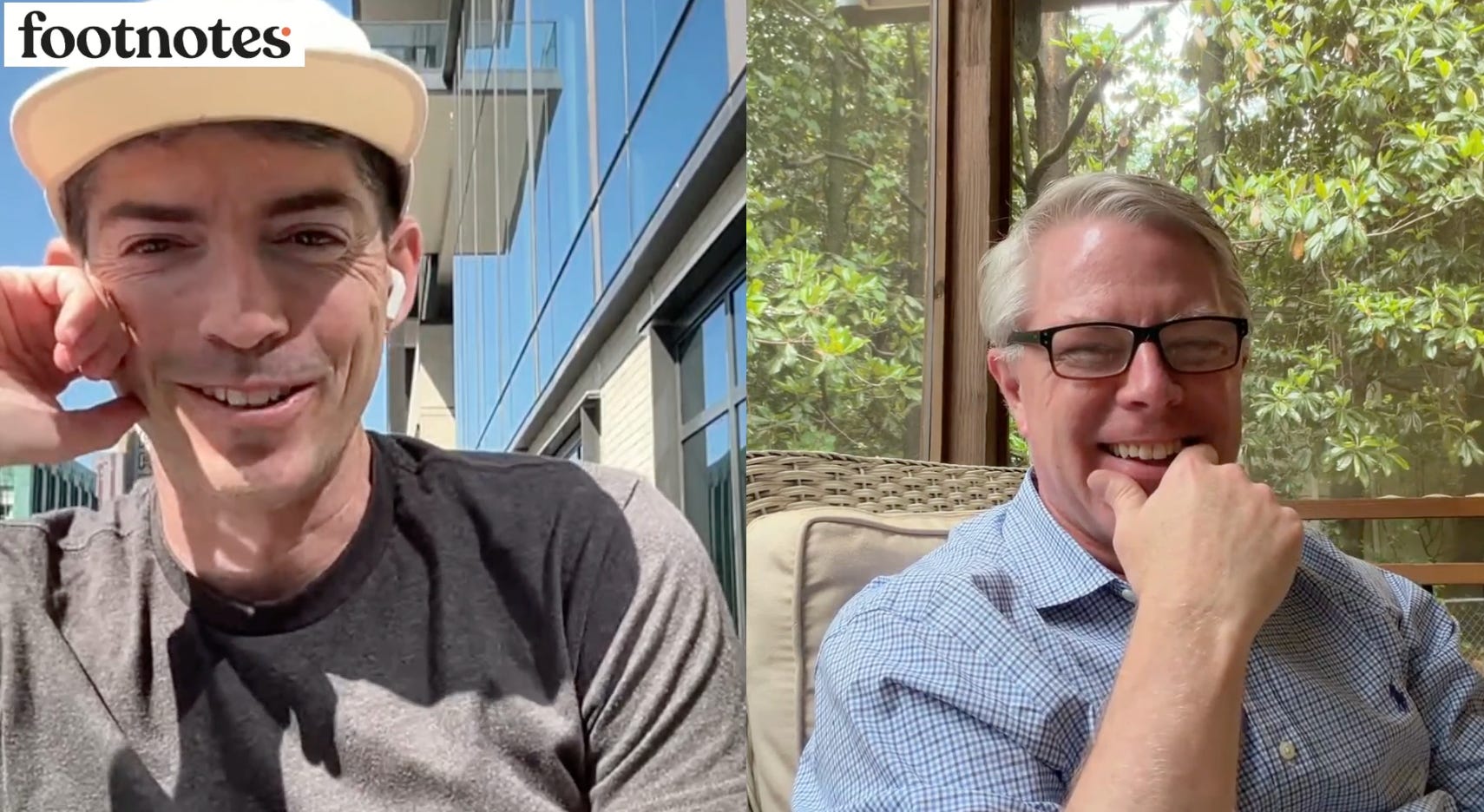
Thanks for reading. You can watch the full conversation here.
Recently from Footnotes


That’s all for this week. Thanks for reading. Help me continue the newsletter! Share Footnotes with a friend!
You can also support Footnotes by getting some swag—our custom hat is 25% off with free shipping in the US.


