

Does Your Diet Suck?
A conversation with Zoë Rom on diet culture, wellness grift, and food tribes.

Last week, I went to Whole Foods and nearly had a panic attack in the yogurt aisle.
If that sounds embellished, if that sounds extreme, then perhaps you’ve never experienced the process of selecting a yogurt from the expansive refrigerated shelves of a modern grocer. Or maybe you have, and you’re just inured to the obscene variety of yogurt for sale in 2026 America.
There are of course a dozen flavors, but that’s merely the first gate of a great moral labyrinth. Strawberry? Vanilla? Lemon? Okay, fine. But is it no-fat, low-fat, or whole-milk? A2, lactose-free, organic, or grass-fed? Is it high-protein, low-sugar, or zero-sugar? Probiotic? Prebiotic? Is it French-style or Greek-style or kefir-style? Or maybe Icelandic skyr, whatever the hell that is?1
There is yogurt from the milk of cows, from the milk of goats, and from the milk of sheep. There is yogurt from coconuts, almonds, cashews, and oats. There is yogurt that wants to build muscle, yogurt that wants to heal your microbiome, yogurt that has clearly been designed upon a whiteboard facing a team of product managers, marketers, and nutritionists who casually toss out terms like “MVP” and “iteration,” whose customers do not eat yogurt but rather “engage” with yogurt.
I stood there, free citizen of a republic ostensibly founded on liberty, ensnared in dairy-induced indecision. And then I picked a tub (2% milk, lactose-free) and wandered to grab my next item from the epistemic warren of the nut butter aisle.
If making decisions about food seems harder than it used to be, you’re not wrong. We are overwhelmed with choice, information, and chatter about food and diet. Information overload may be the condition of life today, but nowhere is it felt more acutely than when it comes to the food we eat.
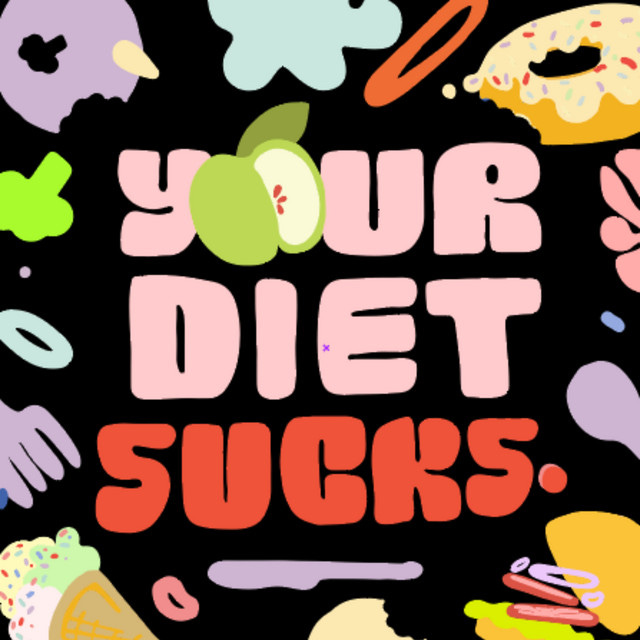
Trying to cut through that confusion are Zoë Rom and Kylee Van Horn, hosts of the independent podcast Your Diet Sucks, where they break down the myths, trends, pseudoscience, and moral panic that surround food and how we think about it.
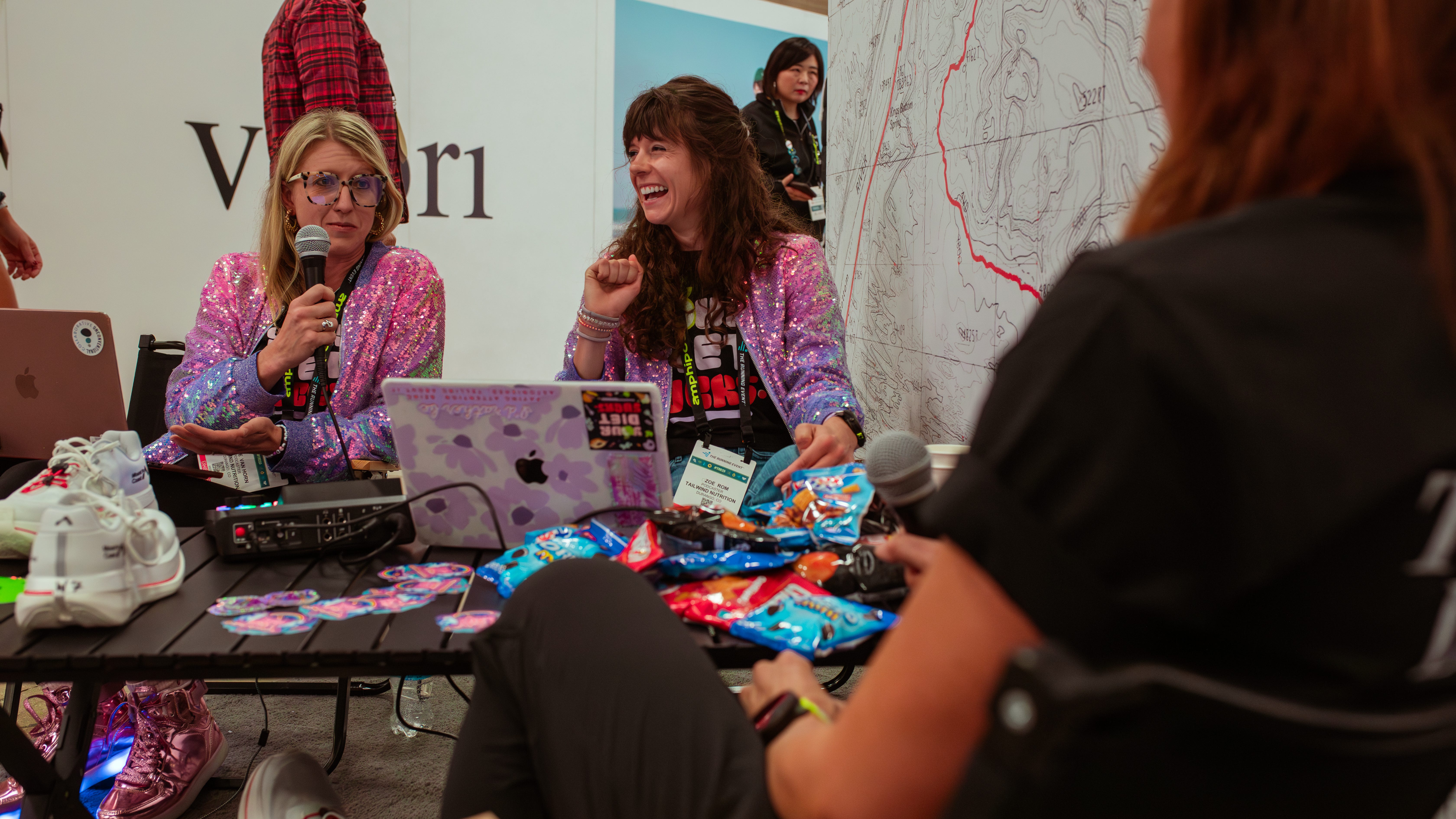
Zoë Rom is a journalist, ultrarunner, former editor-in-chief of Trail Runner Magazine, and the co-author, with Tina Muir, of Becoming a Sustainable Runner. Her work has appeared in Outside, The New York Times, NPR, and elsewhere.
I got the chance to pick Rom’s brain and get her thoughts about the podcast, the strange persistence of diet culture, and how it seeps into ordinary life. I hope you enjoy this short interview.
Sam Robinson: Zoë, thanks for joining. You and Kylee often mention on Your Diet Sucks that “food is culture.” Unpack that for us. Why is food “culture” and not just … food?
Zoë Rom: We all like to imagine we eat like tiny scientists. You heard it on a podcast. You read an article. You clicked on a study. Just the facts, ma’am.
Adorable. How you feel and who you think you are run that decision far more than any study you skimmed. Your class, your ethnicity, your politics, your gender: all of it shows up at dinner. Every part of who you are, pardon the pun, comes to the table. Usually before the food does.
We are drowning in nutrition information, more of it than any humans who have ever lived. Good information, bad information, and a genuinely heroic volume of confident nonsense. And somehow not one of us is healthier, calmer, or any surer of what we’re doing. Funny how that works.
That gap is the whole point. Science is excellent at how. How protein synthesis works, how much your metabolism slows with age, how many calories live in a banana.
Culture and history are the ones that explain why. Why protein is suddenly turning up in Pop-Tarts and cheese puffs like an aggressive houseguest. Why everyone swears their metabolism cratered at thirty when the real decline is closer to a rounding error than a cliff. Why we cling to calorie counting like a life raft, despite it being a system with roughly as many errors as inputs.
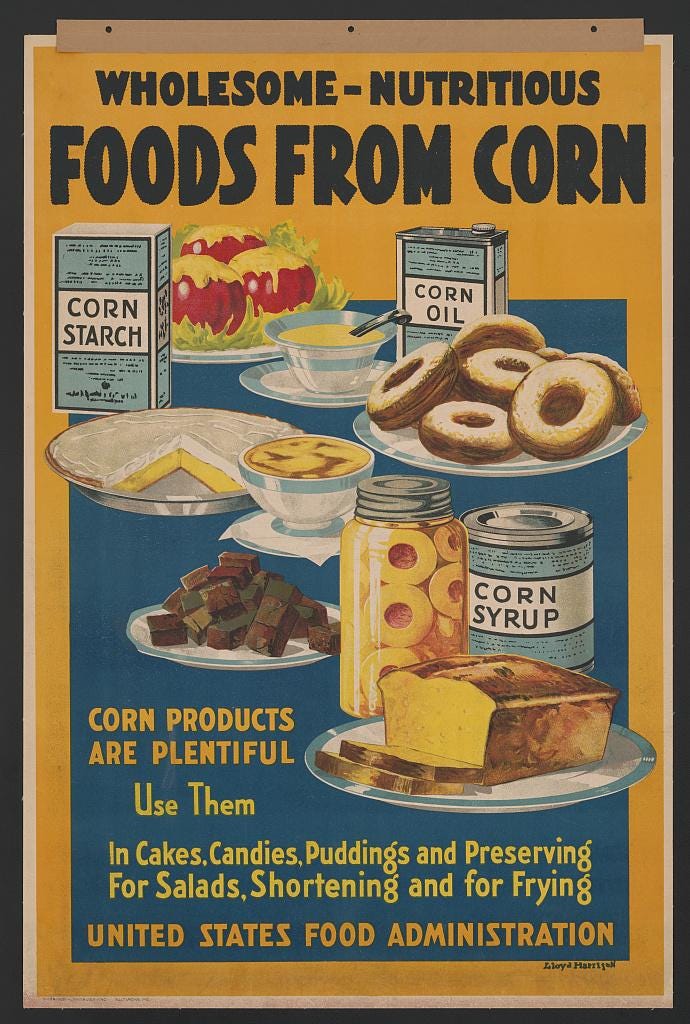
Here is the part nobody prints on the cereal box: a startling number of the people who built modern dieting had genuinely sinister politics. The founding fathers of the wellness regimen, plus the occasional grifting founding girlboss, were eugenicists, purity obsessives, and men with strong, frankly unhinged feelings about (ahem) self-pleasure.
And before anyone files this under “ad hominem,” that is not the argument. The argument is that the bigotry was not a bug. It was the product. These regimens were never really about health. They were about control: who gets to have a body that counts as worthy, and who needs fixing. That impulse escaped the 1800s sanitarium and never went home.
We started the podcast because the volume has never been this high. As a journalist who often runs into crazy rabbit holes during research, and with Kylee as a registered dietitian nutritionist, who are both athletes ourselves, we keep running into bad ideas that won’t die, and people who cling to them with near-religious conviction.
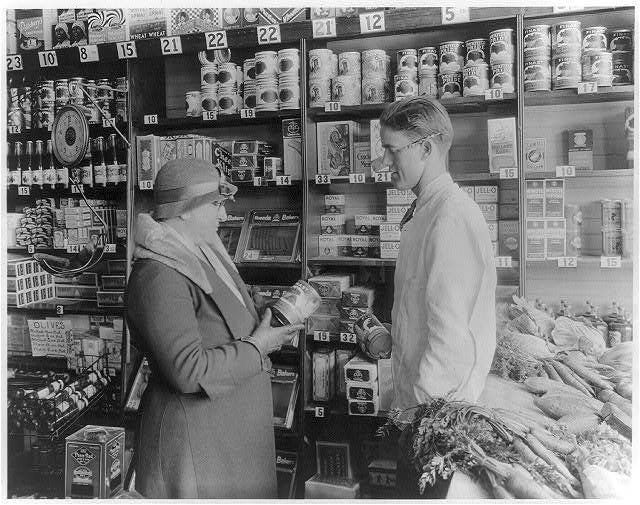
What is it about eating that makes it particularly vulnerable to magical thinking and grift? We have other biological needs—like sleep or breathing—and while there are grifty ideas about those body processes, they don’t approach the scale of the diet industry’s hold on our wallets and eating behaviors.
It’s all anxiety projection, and the answer is sitting right there in the famous cliché: you are what you eat. Or, even more salient today, you eat what you are.
Food feeds not just our bodies but our identities. It becomes you, your blood, your muscle, your face. It’s the outside world we take in and turn into ourselves, several times a day, and some ancient corner of the brain has never gotten over it. French gastronome Jean Anthelme Brillat-Savarin gave us the original in 1825, the line we now shorten to “you are what you eat.”
Two centuries later, influencers like Paul Saladino or The Food Babe sell the flip side, you eat what you are, while conveniently linking a meal plan, supplement stack, and a proprietary creatine blend in the bio.


Anthropologists call this sympathetic magic, and the law of similarity in particular, the belief that like produces like. James George Frazer catalogued it in ritual cultures a century ago. The psychologist Paul Rozin then spent decades showing that educated modern eaters run the identical software at the grocery store.
We half-believe that eating something pure makes us pure, that eating something strong makes us strong, that eating the marketing makes us the person in the ad. The same logic runs in reverse through the “soy boy” panic. Few would cop to this line of thinking out loud, but everyone has quietly hoped a green juice or a kale salad would make them a better person by lunchtime.
Which is why food is the loudest identity marker we own. Vegan, carnivore, paleo, keto: those aren’t meal plans, they’re tribes. Diet is a way of signaling which group you belong to, and you signal yours three times a day in public, ideally on Instagram with the Clarendon filter on. By the time nutrition science arrived, food was already saturated with virtue and shame; it was never so much a question of hitting your macros as it was about morality.
One specific fallacy the podcast discusses is the “naturalistic fallacy.” I loved listening to you discuss this fallacy. Could you explain what it is?
Yes! This is sort of like the N.W.A of logical fallacies—even if you’re not aware of it directly, its influence is inescapable.
The naturalistic fallacy, or appeal to nature, is the belief that anything “natural” is somehow inherently better, healthier, or morally superior. You see it on every food label that says “clean” or “natural.” Those words are legally meaningless and vague AF, but they silently communicate a host of assumptions to the consumer: this product is safe. This product is healthy. This product is good, and you are a good person for buying it.
It shapes so much of diet culture. Natural, good. Chemical, bad. Unfortunately, that delineation is as artificial as blue raspberry flavoring. The folks yelling loudest about the importance of doing something “naturally” usually have a bespoke algae supplement or organic bamboo underwear to sell you. It’s the entire premise behind the paleo diet, clean eating, chemophobia, and the ultra-processed food panic.
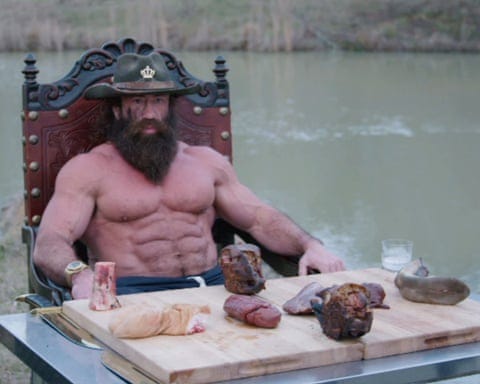
People conflate naturalness with goodness and safety, and the whole thing hinges on the belief that anything that comes from nature must be good, pure, and healthy. (Hold my arsenic, Mother Earth.) Follow it far enough, and it becomes the flawed heuristic behind eschewing vaccines for “natural immunity” and avoiding “foods with chemicals.” Spoiler: everything is chemicals. You are chemicals. Sorry.
“When the loudest voices are selling certainty, history and science are the tools that let you ask important questions: why do I believe this, and who benefits from me acting on it?”
You come from a writing background in running and outdoor journalism, and your podcast moves you into a cultural zone that likely interests a wider audience.
Was there a moment that shifted your interest from writing about diet for athletes to making a whole podcast critiquing diet culture? Do you think athletes are more vulnerable to diet culture than the general population?
I got interested in diet culture and nutrition science because I kept noticing the thousands of small ways pseudoscience worms its way into fitness culture.
At the risk of beating a dead horse that’s already at the glue factory, a few years ago, Spring Energy was running ad campaigns promoting “clean” and “guilt-free” fueling. Their flagship Awesome Sauce gel was marketed to ultrarunners on real, whole-food ingredients and an easier ride for your gut than the usual synthetic gels. Then, independent lab testing showed it contained around 16 grams of carbohydrate, not the 45 grams on the label.
Watching a company engineer a problem, sell you a cure, and then deliver something that carries more risk than the thing it replaced is exactly what made me sit up and pay attention to how this plays out for athletes. So, blame Spring Energy for turning me into the Joker.
Athletes get assumed to understand their bodies and their food better than the rest of us. But a lot of the same traits that make someone a great athlete are exactly what leave them open to bad decisions about their health.
Athletes are just as preoccupied with weight, aging, and performance as everyone else, and often more willing to shell out their hard-earned money on greens powders or oxygenated water for a shot at a one percent improvement.
Sometimes, the people most in tune with their bodies are the least able to spot a placebo or climb out of the cognitive biases baked into fitness and nutrition advice.

Ok, help us out while we scroll through the internet. What are the biggest red flags of diet-culture grift you’ve trained yourself to spot?
The first thing to ask is the biggest one: does this make me feel something? Communicators lean on fear and outrage because emotion moves product and grabs attention. They prey on our fears about disease, aging, fertility, and not performing at our best. If a claim makes you angry or afraid, that’s your cue to slow down and check it. Legitimate science rarely shows up screaming at you to act right now.
Second: what are the incentives? People have wised up to the fact that the internet is basically a high-tech bazaar for snake oil salesmen. But it’s easy to forget that your attention is a commodity too.
Sure, plenty of people are shilling supplements and cryosaunas. Increasingly, though, the thing being bought and sold is your attention, with the algorithm as a shitty, postmodern auctioneer. Just because someone isn’t literally selling something doesn’t mean they aren’t selling something.
Third: is it boring? Because it should be. Real science is slow and boring. The things we actually know work (sleep, stress management, eating enough, dismantling late-stage capitalism) are not sexy. They are not going viral anytime soon, unless a shirtless Jacob Elordi pivots to professional science communication (a girl can dream). So if a claim feels exciting, novel, or like forbidden knowledge that conveniently overturns everything we already know, I get very, very skeptical.
Last question! To wrap up, what are a few books you’d recommend that runners and endurance athletes read about diet? And what podcasts are you loving right now?
Books:
The Skeptic’s Guide to Sports Science, by Nick Tiller. Tiller (the exercise physiologist I cited earlier) breaks down the cognitive biases and logical fallacies most endemic to endurance sport, digs into why exercise physiology is so genuinely hard to study well, and leaves you a far savvier consumer of science.
The Certainty Illusion, by Timothy Caulfield. Caulfield is an outstanding writer and researcher, and this one is a legitimately fun read. It’s about why the truth is so slippery in a polluted information environment: how cognitive biases and bad incentives bend even good science, and how our craving for certainty gets exploited by everyone from wellness influencers to outright charlatans.
Food Intelligence, by Julia Belluz and Kevin Hall. This is basically a Now That’s What I Call Food Science: a greatest-hits tour through the biggest cultural misunderstandings about food and diet, narrated by a health journalist (Belluz, of the New York Times and Vox) and a metabolism scientist (Hall, the NIH researcher behind the landmark ultra-processed food trials).
Podcasts:
Science Vs, hosted by Wendy Zukerman. This one goes well beyond diet, fitness, and health to take on the juicy, contested questions in today’s culture, from smartphones to seed oils to chiropractors. It’s beautifully written and produced, and it does an incredible job of making the science accessible and accurate, with real nuance and expert voices.
Search Engine, hosted by PJ Vogt (formerly of Reply All). A longtime favorite. Every episode answers a single question: Is it okay to drink airplane coffee? Why is everyone in Silicon Valley injecting peptides? What happens when a cemetery goes out of business? Vogt brings real humanity, nuance, and humor to the tough, sticky questions most of us never think to ask, and it’s gorgeously produced. An immediate listen for me, every time.
Subscribe to Your Diet Sucks and get bonus posts on Patreon. You can find YDS on major podcast outlets: Apple Podcasts | Spotify | Amazon Music
Live with Zoë on June 12!
If this conversation left you hungry for more, good news: I’ll be going live with Zoë on Substack Live, Friday, June 12 at 10AM PT, to dig deeper into diet culture, endurance sports, wellness grift, and more.
We’ll talk about food history, diet culture in the Trump and MAHA era, and lighthearted banter about endurance sport and food.
Come hang out, bring your questions, tell your friends, and subscribe so you don’t miss it.
It is my belief, based on absolutely no evidence, that 95% of people who purchase Icelandic skyr yogurt have no clue what it is, but believe feeding it to their children might help get them into Stanford.
Great writing as always, Sam-- I laughed out loud several times as I "walked" through that grocery store with you. Very interesting interview, too, will have to check out the YDS podcast.
Great interview, huge fan of Zoe and the YDS pod here! But have to admit I do enjoy the "Icelandic" style yogurt.